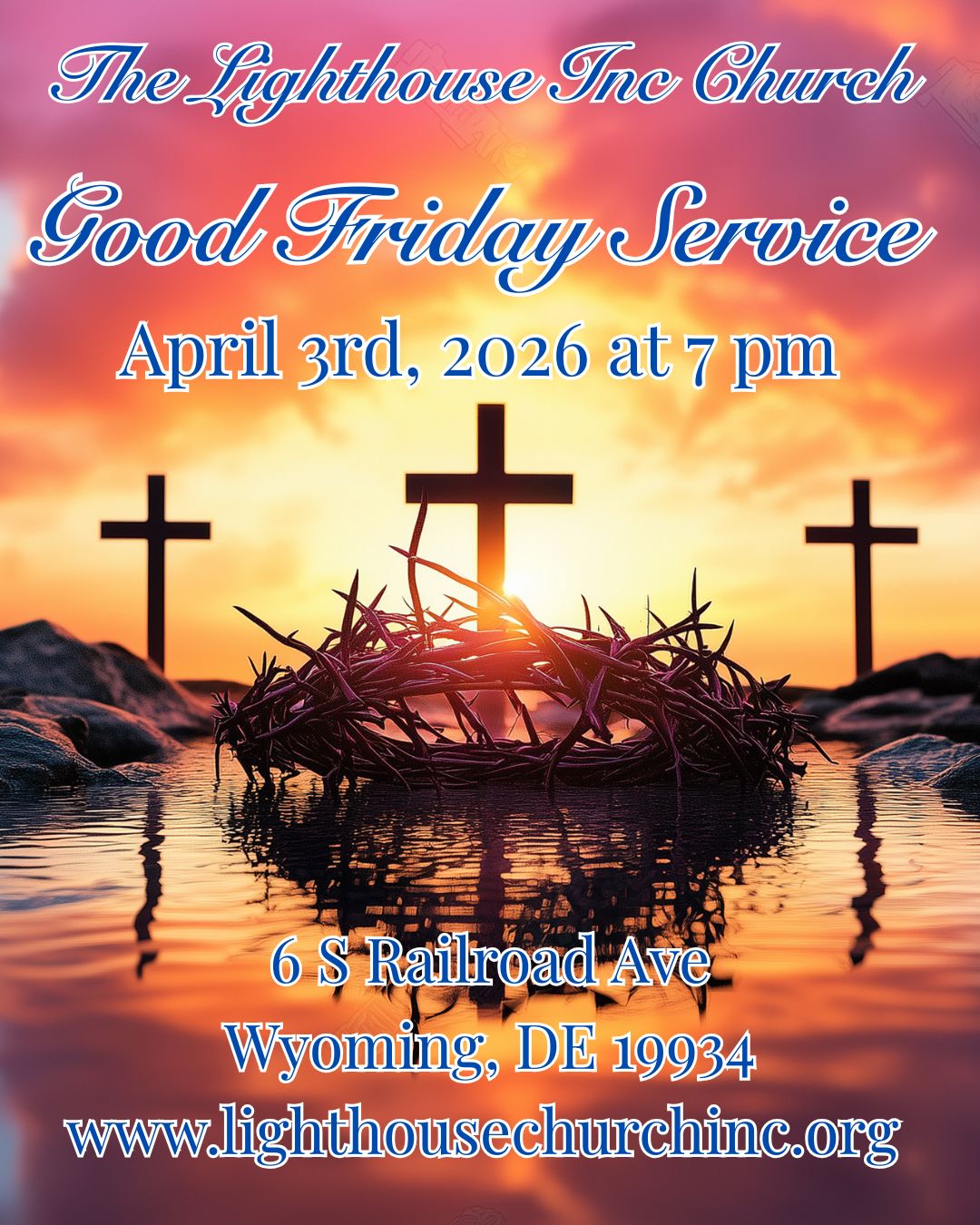
Good Friday Events – Shared by Evangelist Pastor Barbara – April 3, 2026
What Events Took Place on Good Friday According to the Bible?
– A Deep Dive into the Six Key Events
Good Friday is one of the most significant days in the Christian calendar. It marks the crucifixion of Jesus Christ, the pivotal event that symbolizes sacrifice, redemption, and the ultimate victory over sin and death. As Christians commemorate this day, it is essential to understand the various events that took place during the crucifixion and their deeper spiritual meanings. From the powerful words spoken by Jesus to the cosmic signs in the heavens, Good Friday is a day filled with profound moments that echo throughout human history.
In this article, we will explore the six key events that occurred on Good Friday, as recorded in the Bible. Each event reveals something crucial about the nature of Christ’s sacrifice and its meaning for humanity. Through these events, we can glimpse into the love, mercy, and grace that God extended to the world through His Son, Jesus Christ.
- The Betrayal and Arrest of Jesus (Matthew 26:47-56)
The events of Good Friday begin with a dark moment in the Garden of Gethsemane. Jesus, knowing that His time had come, had taken His disciples to pray. It was here that Judas Iscariot, one of Jesus’ twelve disciples, betrayed Him with a kiss. This betrayal was not only a personal act of treachery but also a fulfillment of the prophecies in the Old Testament. Jesus had already foretold His betrayal, and in this moment, Judas’ actions set the stage for the suffering that was about to unfold.
As Judas approached Jesus with a group of soldiers, he betrayed Jesus by greeting Him with a kiss, signaling to the soldiers that Jesus was the one they should arrest. This moment of betrayal by one of His own disciples was a poignant reminder of humanity’s fallen nature and the depth of Christ’s love. He did not retaliate or curse Judas; instead, He addressed him with the words, “Friend, do what you came for” (Matthew 26:50), showing His mercy even in the face of betrayal.
The arrest itself was marked by confusion and violence. Peter, in an attempt to defend Jesus, drew his sword and cut off the ear of a servant of the high priest. However, Jesus rebuked him, telling him to put the sword away. “For all who draw the sword will die by the sword” (Matthew 26:52). With this action, Jesus demonstrated His commitment to fulfill God’s plan of redemption, even at great personal cost.
- The Religious Trials (Matthew 26:57-68)
After Jesus’ arrest, He was taken to the high priest’s house, where He would face a series of religious trials. These trials were not meant to seek justice but to secure a conviction for Jesus’ execution. The religious leaders, led by Caiaphas, sought to accuse Jesus of blasphemy. However, they struggled to find reliable witnesses to testify against Him.
Jesus remained silent for much of the trial, fulfilling the prophecy in Isaiah 53:7, “He was oppressed and afflicted, yet He did not open His mouth.” When Caiaphas asked Jesus directly if He was the Christ, the Son of God, Jesus affirmed it, stating, “You have said so” (Matthew 26:64). This declaration led to a charge of blasphemy, and the religious leaders condemned Him to death. They spat on Him, struck Him, and mocked Him.
This trial was a pivotal moment in the story of Good Friday because it demonstrated how Jesus endured suffering and humiliation on behalf of humanity. He remained silent in the face of false accusations, knowing that His purpose was to die for the sins of the world.
- The Roman Trials (Matthew 27:11-26)
After the religious leaders condemned Jesus, they handed Him over to the Roman authorities. Jesus was brought before Pontius Pilate, the Roman governor, who initially found no fault in Him. Pilate tried to avoid making a decision, but the pressure from the Jewish leaders and the crowds intensified. Pilate offered to release Jesus as part of the Passover tradition of releasing a prisoner. Still, the crowd demanded the release of Barabbas, a notorious criminal, and the crucifixion of Jesus.
Pilate, seeking to absolve himself of responsibility, symbolically washed his hands, saying, “I am innocent of this man’s blood” (Matthew 27:24). However, he ultimately handed Jesus over to be crucified, bowing to the demands of the crowd. This act of political cowardice highlights the struggle between human authority and divine will. Pilate’s refusal to act justly led to Jesus’ condemnation, but even in this, God’s plan of salvation was unfolding.
- The Scourging and Mockery of Jesus (Matthew 27:27-31)
Before Jesus was led to the cross, He was subjected to horrific physical abuse. The soldiers mocked Him by placing a crown of thorns on His head, dressing Him in a purple robe, and striking Him, hailing Him as “King of the Jews” (Matthew 27:29). This mockery of Jesus’ kingship was both cruel and ironic. The soldiers were blind to the truth that the man they were mocking was indeed the King of kings.
Jesus was then scourged, a brutal form of flogging that often left the victim near death. This suffering was part of the fulfillment of Isaiah 53:5, “But He was pierced for our transgressions, He was crushed for our iniquities; the punishment that brought us peace was on Him, and by His wounds we are healed.” Every lash He endured was not only physical pain but also the weight of humanity’s sin. Jesus took the punishment we deserved, enduring the ultimate suffering for the sake of redemption.
- The Journey to Golgotha (Matthew 27:32-34)
After the scourging, Jesus was forced to carry His cross to the place of His execution. The journey to Golgotha, known as the Via Dolorosa (the Way of Suffering), was marked by pain, exhaustion, and public humiliation. Jesus, weakened from the scourging, fell under the weight of the cross, and a man named Simon of Cyrene was compelled to help Him carry it (Matthew 27:32).
As Jesus made His way to Golgotha, the women of Jerusalem wept for Him. Jesus, however, responded with compassion, telling them not to weep for Him, but for themselves and their children (Luke 23:28). This moment of sorrow and compassion highlights the deep love Jesus had for the people, even as He endured the suffering of the cross.
- The Crucifixion – The Nails and the Cross (Matthew 27:35-50)
Once at Golgotha, Jesus was nailed to the cross. His hands and feet were pierced with large nails, and He was raised up between two criminals, one on His right and one on His left. This brutal method of execution was not only physically agonizing but also publicly humiliating.
As He hung on the cross, Jesus uttered the first of His seven last words: “Father, forgive them, for they do not know what they are doing” (Luke 23:34). This prayer for His persecutors was a profound demonstration of His love and grace. Even in the midst of His agony, He prayed for the forgiveness of those who were causing His suffering.
Throughout the hours on the cross, various people mocked and taunted Him. They challenged Him to save Himself if He truly was the Son of God. Yet, Jesus did not respond with anger or violence. Instead, He remained silent, fulfilling the prophecy of Isaiah 53:7.
At noon, an eerie darkness covered the land, lasting for three hours. This supernatural event was a sign of the cosmic significance of Jesus’ death. The darkness symbolized the judgment of God falling upon sin and the separation of the Father from the Son as Jesus took on the sins of the world.