

Greetings Lighthouse Inc., Church Family,
Happy Rosh Hashanah
In Christ,
Pastor/Evangelist Barbara Lynch
5783 – Rosh Hoshannah, Happy New Year
Rosh Hashana for Hebrew Year 5783 begins at sundown on and ends at nightfall on .
Rosh Hashanah (Hebrew: ראש השנה), (literally “head of the year”), is the Jewish New Year. It is the first of the High Holidays or Yamim Noraim (“Days of Awe”), celebrated ten days before Yom Kippur. Rosh Hashanah is observed on the first two days of Tishrei, the seventh month of the Hebrew calendar. It is described in the Torah as יום תרועה (Yom Teruah, a day of sounding [the Shofar]).
Rosh Hashana is celebrated on the sixth day of creation, the day in which Adam and Eve were created. The upkeep of the universe and fulfilling G-d’s purpose for His creation depends on mankind. It teaches us the special merit and at the same time the great responsibility we all have in making this world a better place.
The holiday of Rosh Hashana is unique in that it is celebrated two days in Israel just as in the Diaspora.
The first night of Rosh Hashana, we wish each other “L’shana Tova Tikateivu Vtaichateimu” – “May you be inscribed and sealed for a good year.”
We don’t wish the same on the second night. The reason is because the Talmud tells us that, “The righteous people are immediately inscribed on the first day of Rosh Hashana, for good life.” To demonstrate that we consider everyone righteous, we wish “L’shana Tova” only the first day. To wish someone the same on the second night or day, would mean that we are in doubt whether they are righteous. It teaches us how careful we must be to view others in a positive way, especially on Rosh Hashana.
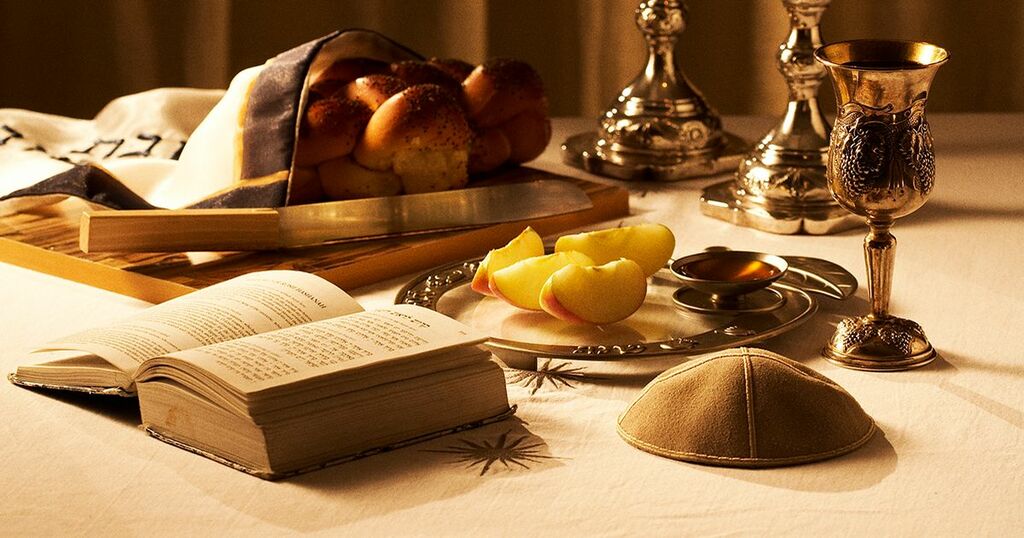
On Rosh Hashana, we eat different foods to symbolize our prayers for a sweet year. For this reason, we dip the Challa and apple in honey. We also eat foods which symbolize good things. For example, many people eat part of the head of a fish and declare, “May we, this year, be at the head!” In other words, we should be on top and not on the bottom.
Listening to the blowing of the Shofar on Rosh Hashana is a very important mitzvah. The sound of the Shofar on Rosh Hashana serves as a wake up call to return to G-d, for the sound of the Shofar reminds us that Rosh Hashana is the Day of Judgment.
Also, on Rosh Hashana we proclaim G-d as the King of the universe. At the coronation of a king, it is customary to blow trumpets. Through blowing the Shofar we declare G-d King of the universe.
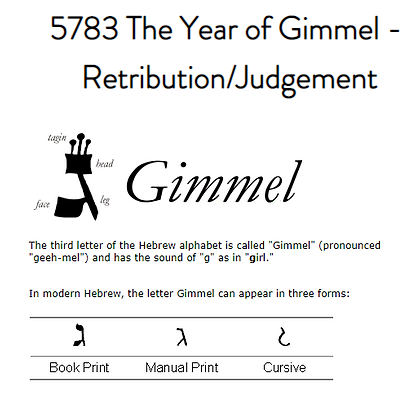
The Jewish Year 5783 (2023) official ends the shmita year (7th Holy Year) and begins a brand new 7 year cycle. 5783 (2023) that will occur September 25th on the Feast of Trumpets, also known as the Jewish New Year Rosh Hashanah, is represented by the Hebrew letter Gimel (or Gimmel) for the number 3. The letter Gimmel resembles both a foot and a person walking in the direction of the left. The word Gimel is derived from the root Hebrew word gemul, which means ‘justified repayment’, or the giving of reward and punishment.
Therefore, 5783 will be a continuation and pinnacle point of the year 5782. Because a marking always takes place before the act of judgement occurs, the year 5782 resembled the marking of truth, and 5783 will conclude with the act of judgement occurring resulting in both blessing and curse according to the recipients. And because 5782 was a shmita year (7th Holy Year), and 5783 is the beginning of a new cycle, 5783 will also signify the ending of one season and the beginning of a new season. Therefore, we will also see God bringing the works of this season into completion and beginning a new work.
Tanakh
Rosh Hashana I / רֹאשׁ הַשָּׁנָה א׳
Torah Portion: Genesis 21:1-34; Numbers 29:1-6
- 1: Genesis 21:1-4 · 4 p’sukim ·
- 2: Genesis 21:5-12 · 8 p’sukim ·
- 3: Genesis 21:13-21 · 9 p’sukim ·
- 4: Genesis 21:22-27 · 6 p’sukim ·
- 5: Genesis 21:28-34 · 7 p’sukim ·
- maf: Numbers 29:1-6 · 6 p’sukim ·
Haftarah: I Samuel 1:1-2:10 · 38 p’sukim
Rosh Hashana II / רֹאשׁ הַשָּׁנָה ב׳
Torah Portion: Genesis 22:1-24; Numbers 29:1-6
- 1: Genesis 22:1-3 · 3 p’sukim ·
- 2: Genesis 22:4-8 · 5 p’sukim ·
- 3: Genesis 22:9-14 · 6 p’sukim ·
- 4: Genesis 22:15-19 · 5 p’sukim ·
- 5: Genesis 22:20-24 · 5 p’sukim ·
- maf: Numbers 29:1-6 · 6 p’sukim ·
Haftarah: Jeremiah 31:1-19 · 19 p’sukim
sources:
Rosh Hashanah 5783 – Beth Israel
Rosh Hashana begins Sunday night September 25th, through Monday (Sept. 26) and Tuesday (Sept. 27). Q. Rosh Hashana, in addition to being the Day of Judgment, is also Rosh Chodesh, the first day of the month Tishrei. Why is there no mention in the prayers that it’s also Rosh Chodesh?
Jewish Liturgical Readings: 2022-2023 Jewish Year 5783
16 Tishrei11th October 2022 סוכות ב׳ Sukkot is celebrated over seven days [Eight in the Diaspora.] The first two days of Sukkot are a major holidays [Yom Tov] in the Diaspora and are followed by the Festival “weekdays” called Chol HaMoed. In Israel the Chol HaMoed begin on Sukkot Day II.
Jewish Year 5783 Year of Retribution Prophetic Message
Jewish Year 5783 Year of Retribution Prophetic message.
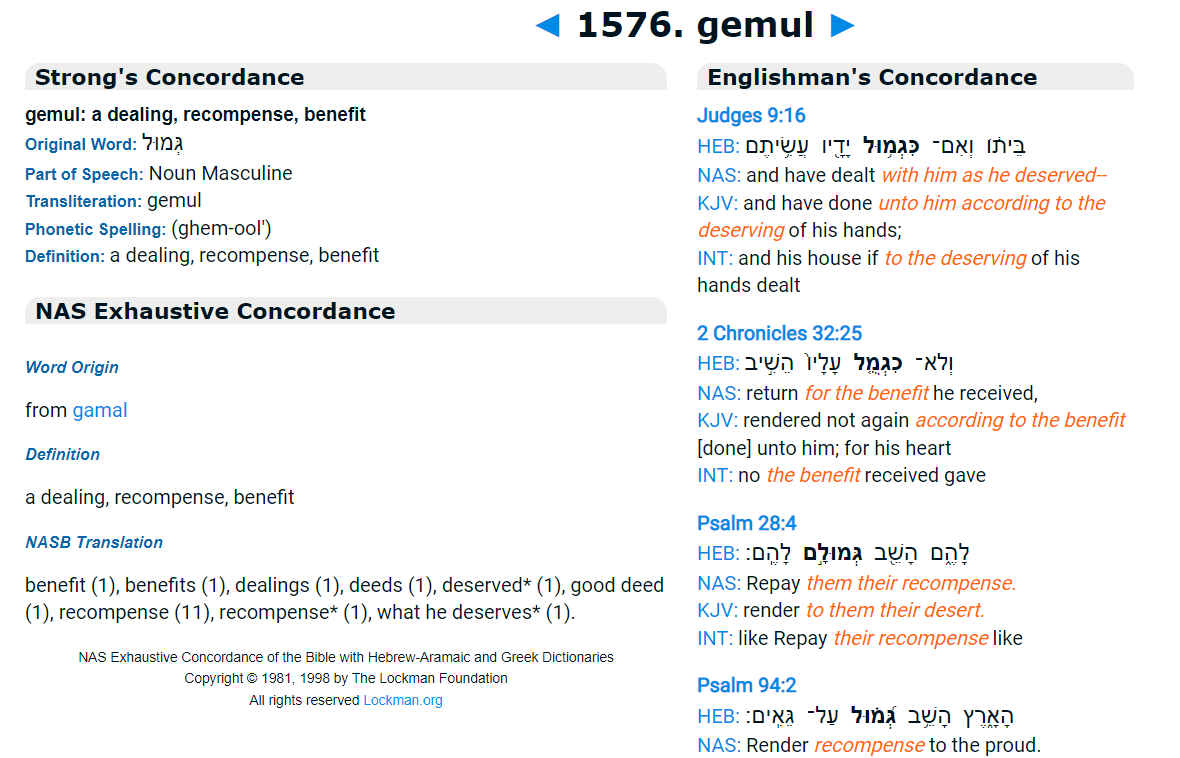
Strong’s Hebrew: 1576. גְּמוּל (gemul) — a dealing, recompense, benefit
Original Word: גְּמוּל Part of Speech: Noun MasculineTransliteration: gemulPhonetic Spelling: (ghem-ool’)Definition: a dealing, recompense, benefit NAS Exhaustive Concordance Word Origin from gamal Definition a dealing, recompense, benefitNASB Translation benefit (1), benefits (1), dealings (1), deeds (1), deserved* (1), good deed (1), recompense (11), recompense* (1), what he deserves* (1).